
Written by Alexandra F. Gilbert
A peaceful lull fell across the room, a nonverbal signal of our collective thoughts: lunch. After a few hours of animated conversation discussing the inception of a women’s artisanal collective, it was time to recharge. Stepping out of the school hall, we were greeted not by fresh air, but alarmingly, by a haze of grey smoke, punctuated by orange flames licking the nearby shrubbery. Unnerving thoughts of wildfires and deforestation flitted through my mind. However, on looking around, the women from the focus group appeared as if they could equally be watching butterflies floating lazily in mid-air.
Bewildered, I approached one woman with her child impressively balanced on her hip to gain some much-needed insight. She breezily replied that they had, in fact, started the fire as a measure to cut back undergrowth to reduce the risk of the presence of snakes and other undesirable visitors. I mentally added this to the growing list of ways I had witnessed Tsimane’ knowledge holders using fire as a tool to sustain their livelihoods. Security, the newest addition, now sat alongside agricultural practices, cooking and artisanal practices, leaving me wondering what other remarkable relationships were forged with fire.
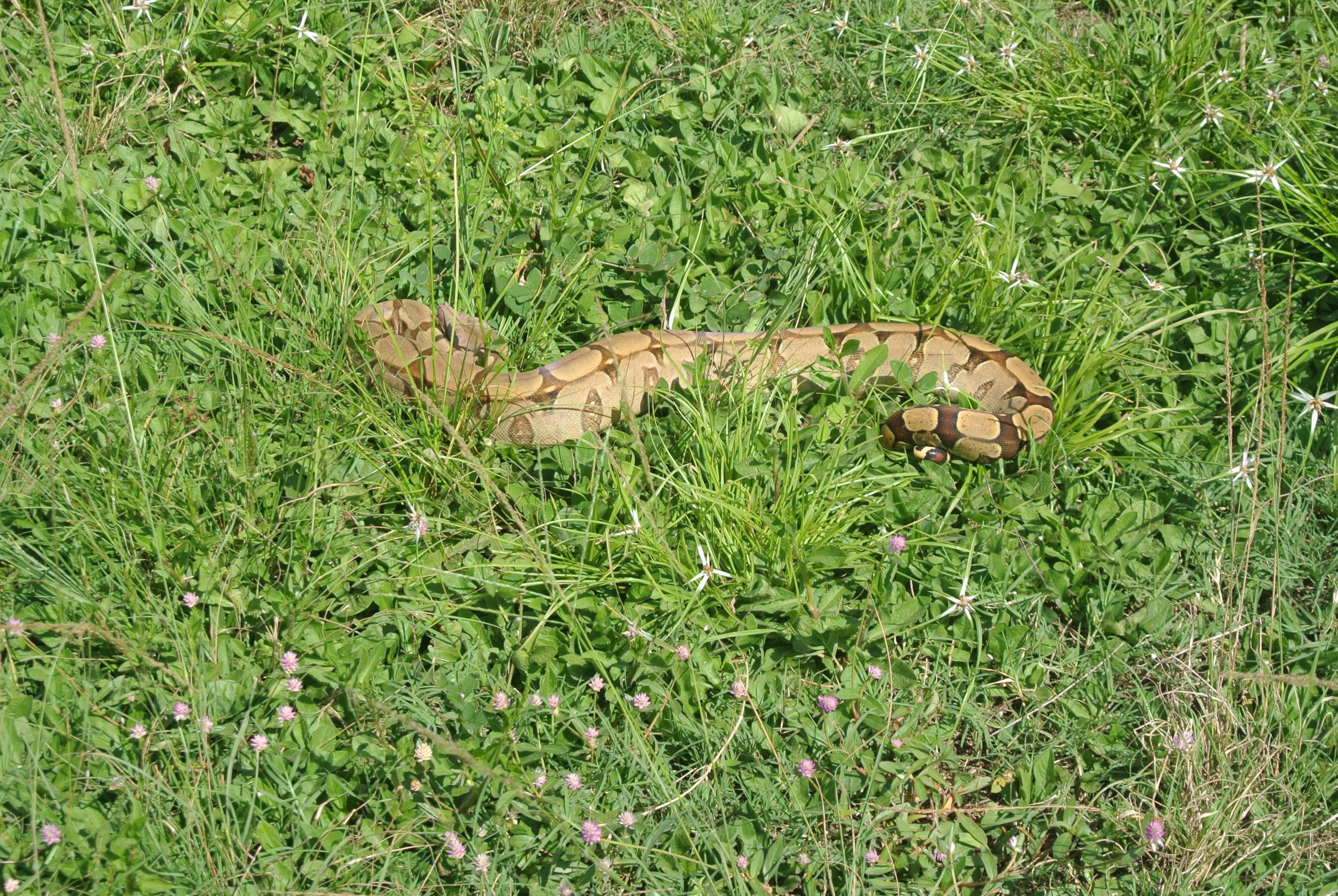
As if on cue, much to the delight of a gaggle of children, a majestic and enormous snake suddenly emerged from the grass. In a display that felt positively biblical, the creature exposed itself to slither across patches of blackened grass, dodging the most intense areas of the blaze. It reached the far end of the carefully prescribed burning area before camouflaging with the grass once again. I was reassured by members of the group that the snake was not venomous, but nevertheless I sat down to eat lunch feeling grateful both to have witnessed this scene and to know our scaly friend was a little further away than before.