Written by Alexandra Florence Gilbert
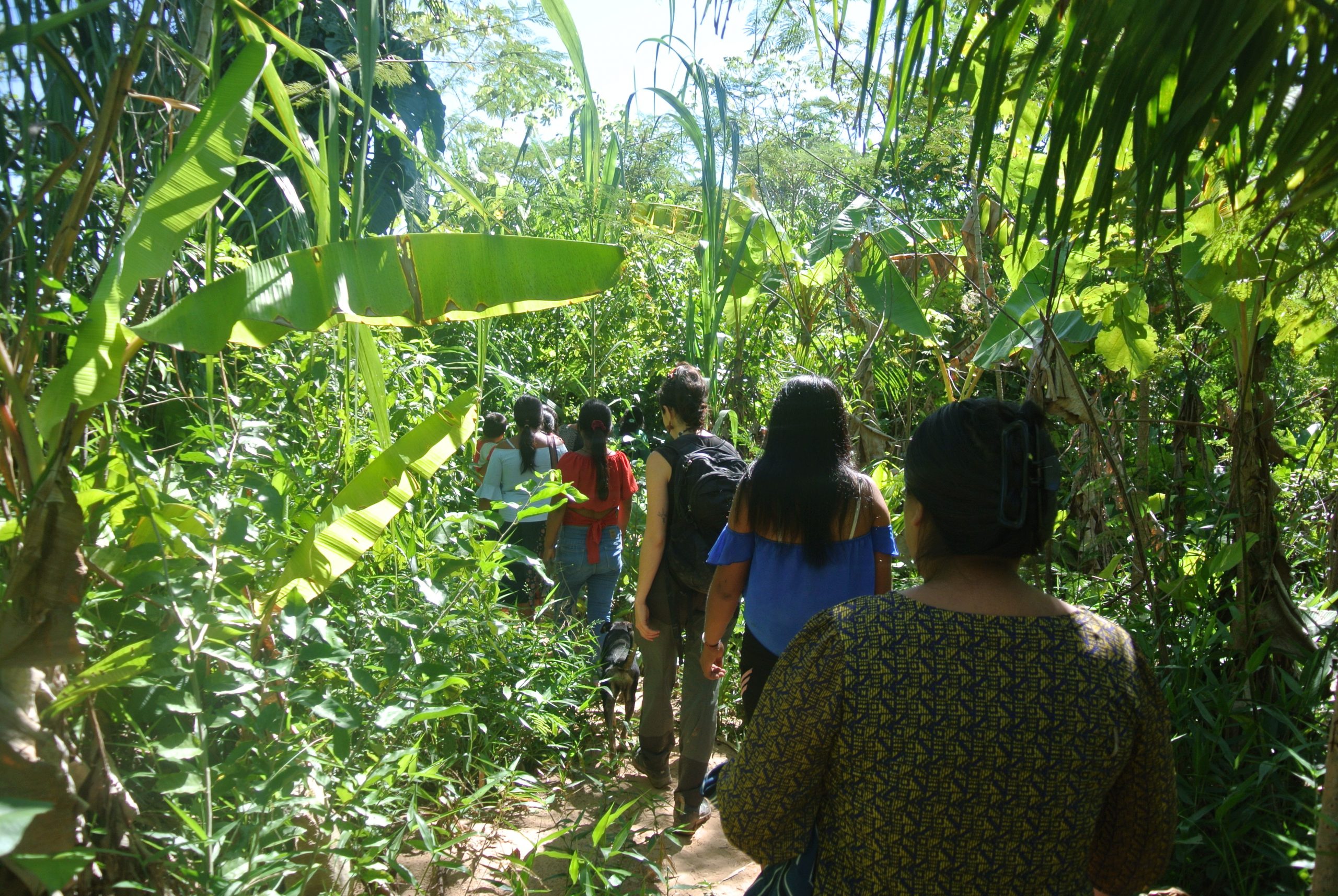
We started off as three. Three became seven, then five more joined, and soon we were a long snake of women weaving our way through the forest. We were on the lookout for plants collected and used by local Tsimane’ women to create beautiful seed necklaces and woven saraij bags.
As we walked, chatter and laughter drifted between the group and every now and then someone would stop to point out something to Julia and I. They shared their knowledge with us about the local uses and names of motacu leaves, chonta trees and many other species that I had never seen before. Santa, the knowledge holder leading the walk, was sure footed and steady in her flip flops whilst I tripped over branches behind her like a clumsy puppy.
Half an hour deep into the forest we arrived at our final destination. There stood a tree so inconspicuous I had to check with Santa that it was the same tree she was identifying. Small and leafless, it is the only cotyicotyi tree left in the community, a plant historically used to dye hand spun cotton a bright yellow colour for weaving. She showed us how its pigment is extracted from the centre of the plant using a machete and significant elbow grease.
In part due to the rising popularity of coloured wool over cotton, we were told that only two women in the community still use this pigment. All the other cotyicotyi have been cut down by both cattle ranchers and community members, to clear space for livestock or crops. After some exchanges of questions and stories, we slowly headed back for lunch, seeing the forest with new eyes and uplifted to be in the company of a big group of women.