Written by Júlia Orrit
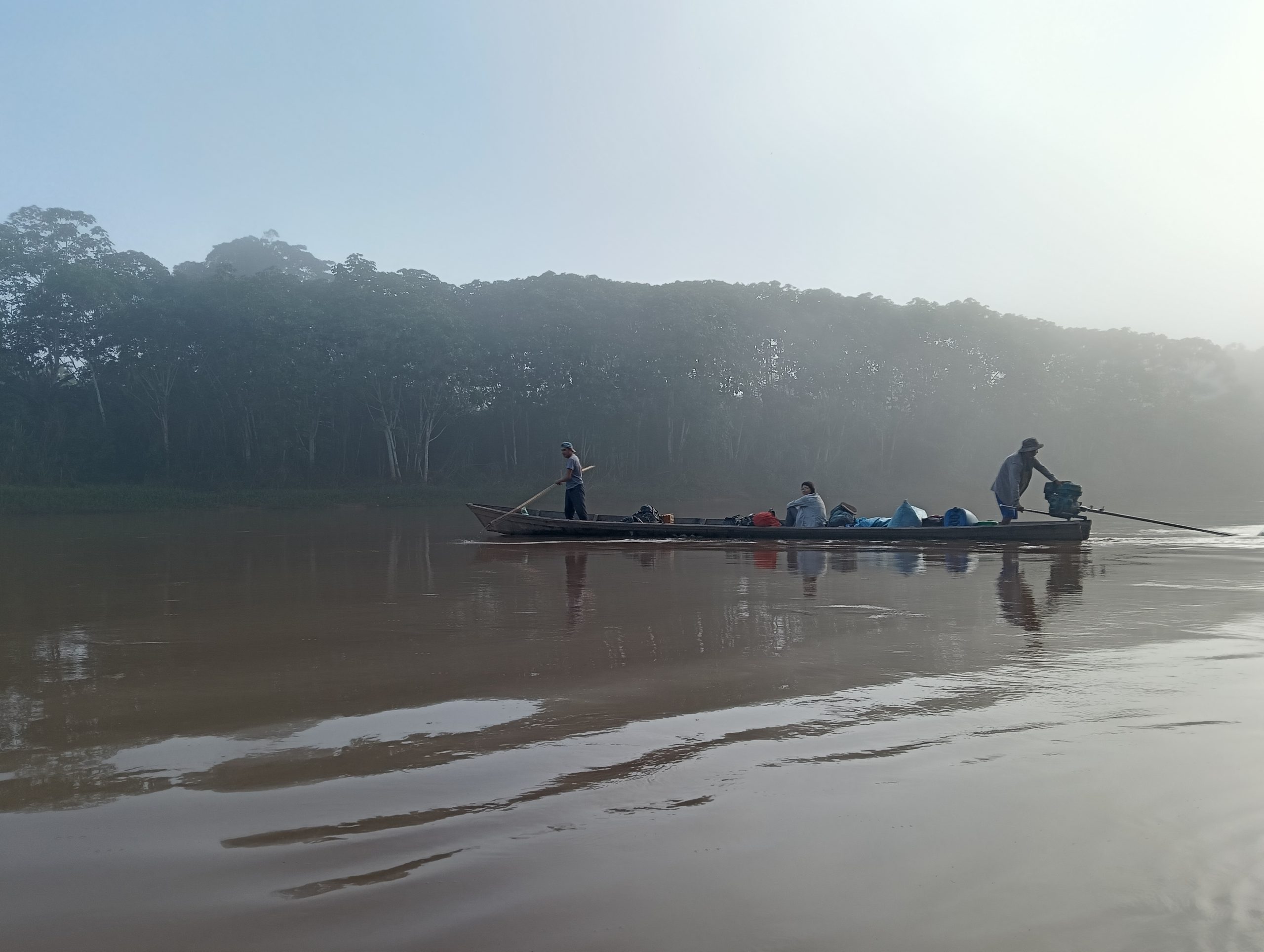
When we travel to the communities upstream along the Maniqui River, we spend two days travelling by canoe. It is not always a comfortable journey: many hours sitting without being able to move much, under the sun or the rain, surrounded by the river and the forest. Yet these two days are much more than just a way of getting from one place to another. They are a time to prepare, reflect, and slowly leave one world behind as we enter another.
During the journey, we reflect on the weeks ahead and those we had just left behind, and on the transition from individual city life to the community that awaited us in the forest. We say goodbye to family and friends back home and prepare to connect with the people who would be joining us in the coming three weeks, with whom we would share meals, work together, or face unexpected challenges.
When it is time to return, we make the same journey downstream. But although the river is the same, we are not quite the same people anymore. Three weeks living in the forest and learning from Tsimane’ culture change you: they make you grow. Of course, after weeks in the field, you look forward to a shower and a comfortable bed, you dream of walking down a street without mosquitoes finding every patch of exposed skin, and of reconnecting with family and friends. But you also return with something that is harder to put into words.
You come back a little more grateful for the experiences shared with the team and the community, a little sadder to say goodbye to people who have become family to you, and a little more connected to the forest and the people who call it home. Perhaps you return knowing a little more about everything or, more importantly, realizing how much there is still left to learn.