Our research on Tsimane’ – fungi relations is going really well, and every month we document fantastic new mushroom species with their uses, stories and jokes. Our research suggests that especially the older people know about Bitatu’ (mushrooms), but that this knowledge is currently hardly passed on to the younger generations. Consequently, one of the goals of our research is to safeguard and revitalise this knowledge, and it is amazing to see fungal enthusiasm being rekindled with the workshops we do.
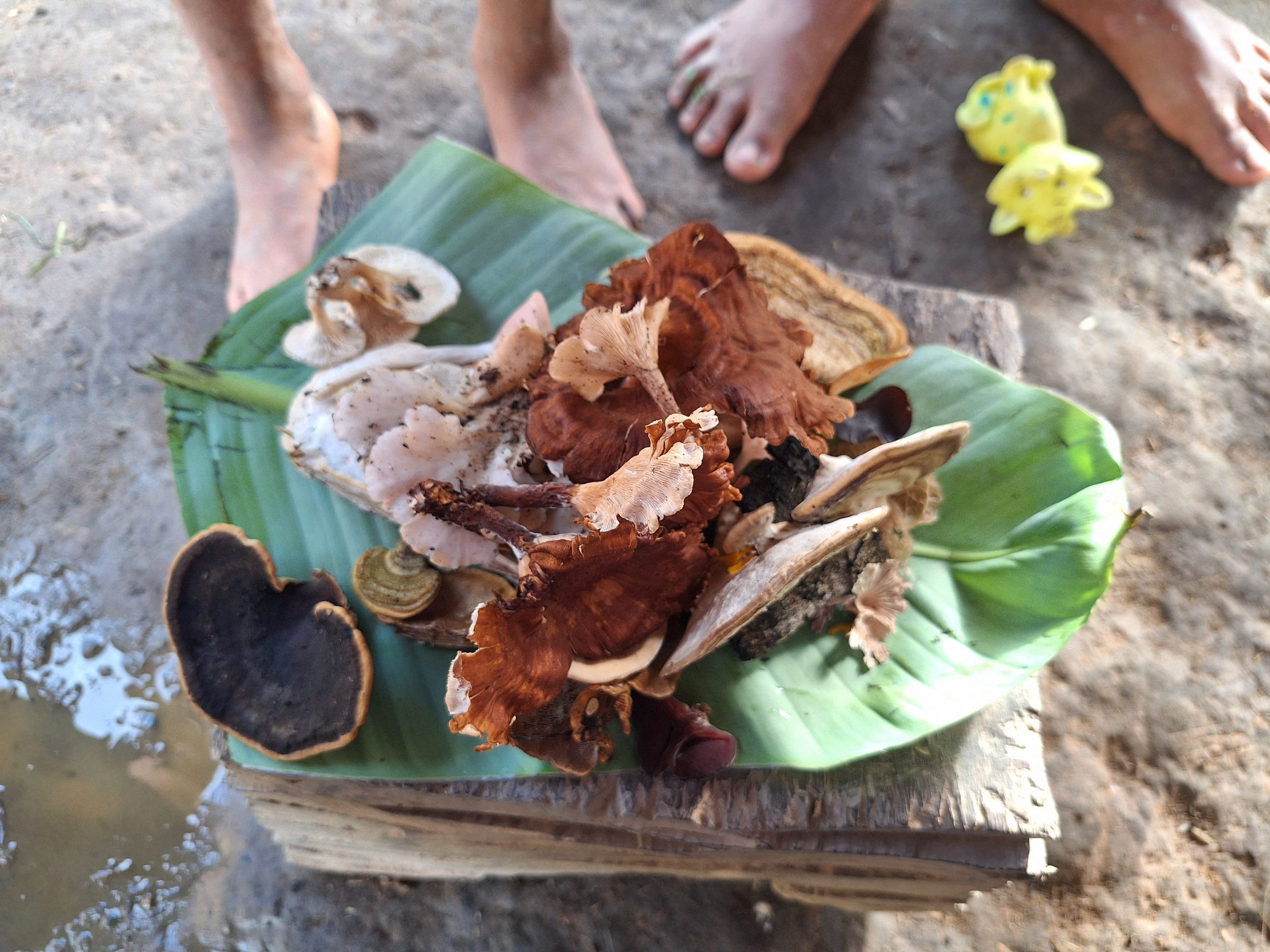
Our last trip proved very special in this regard. One late afternoon we were resting a little in the provisional camp we had set up, after a long day of interviews and muddy hikes through the forest. Minutes ago the rains had come pouring down, and the setting sun was now casting orange hues on the mist rising from the trees around us. A family approached us, carrying in their hands large paya leaves filled with mushrooms. In a chaotic frenzy of enthusiasm they told us all the names and the uses of the more than 50 mushrooms that they had collected. Often multiple people spoke at the same time, and Isidoro and Nelly, the Tsimane’ researchers of our team, had a hard time to translate it all to sensible Spanish. What a wonderful amount of knowledge to document! A slow dread crept upon us though, when we realised how much work this was going to be. Every mushroom needs to be labelled, it’s DNA sampled, meticulously described and then dried on a small gas stove before the mushroom starts to decompose, which happens a lot faster than one would like to in this steamy forest. And all this while the darkness of the night started rushing in. Next morning, after only a little sleep, we were breaking up camp and gathering our things in the canoes to continue our trip up river, when three children approached us with yet some more mushrooms. “Here, for you, Bitatu‘”!