Written by Mireia Alcántara Rodríguez.
How do we move from theory and one-way projects (that favor researchers) to action-based research? While there isn’t a simple answer, we can start with two things: empathy and love. This isn’t some cheesy argument, but reality itself – or at least, as we have experienced it.
Gloria Steinem (1934–2026) told us that “empathy is the most radical of all human emotions.” Empathy allows us to immerse ourselves in the reality of other humans (or animals) and involves an active, conscious commitment, free from judgment. It has an incredible transformative power, creating bonds of trust and respect. On the other hand, bell hooks (1952–2021) stated that love requires care, commitment, and responsibility; that it is not just a feeling, but an action.
If we combine all these ingredients (empathy, commitment, care, trust, responsibility, and respect) we have the ideal recipe for conducting research grounded in the needs of our local collaborators, aligned with our research objectives. In fact, these objectives must be shaped by local contexts and aim for reciprocity.
It’s not an easy path. And it’s certainly not the normative path we’re usually guided down in science and academia. We’ve made mistakes, we’ve rivaled with one another (in a competitive, individualistic, and patriarchal society, it’s no surprise that our insecurities are fueled and we end up at odds), and we’ve, at times, fallen apart.
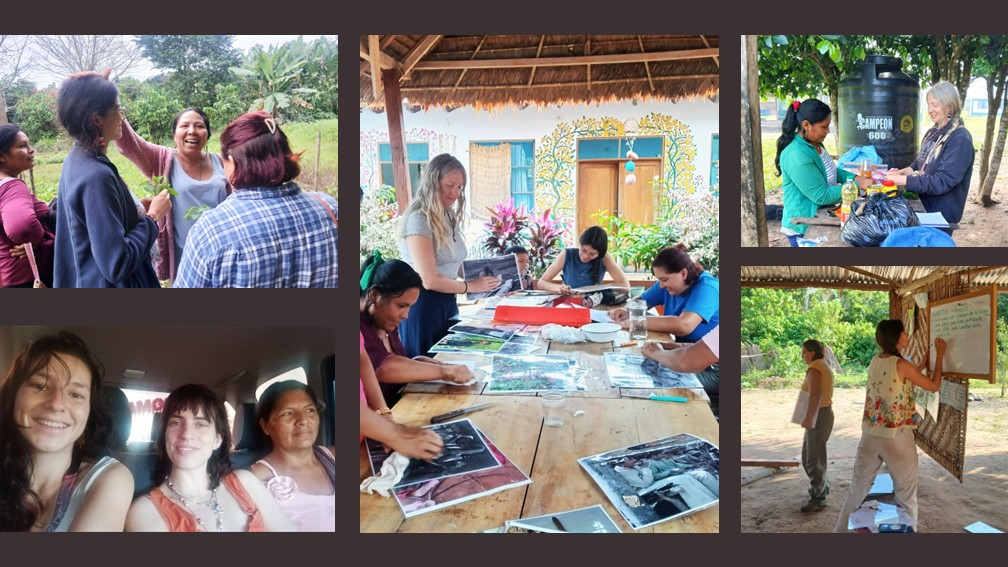
But if there’s one thing we’ve learned together, it’s to reach out to one another to get back on our feet, to acknowledge our mistakes, and to understand and respect each other, beyond our differences. And that has required a great deal of empathy and a tremendous amount of love – which has resulted in a collaborative research project where our ideas have gradually been transformed into actions. These initiatives have included various processes carried out with and for (though not exclusively) Tsimane’ women, in line with research on socio-ecological changes and biocultural revitalization projects.
There is still a long way to go, and the most challenging part is ensuring the continuity of the projects we’ve started, which requires a constant commitment – not only to science, but to the people involved in this research, and especially to women. Among ourselves, we have built networks that connect caregiving and scientific research, demonstrating that these fields are not mutually exclusive; on the contrary, it is necessary to address them together, no matter how radical that may seem.