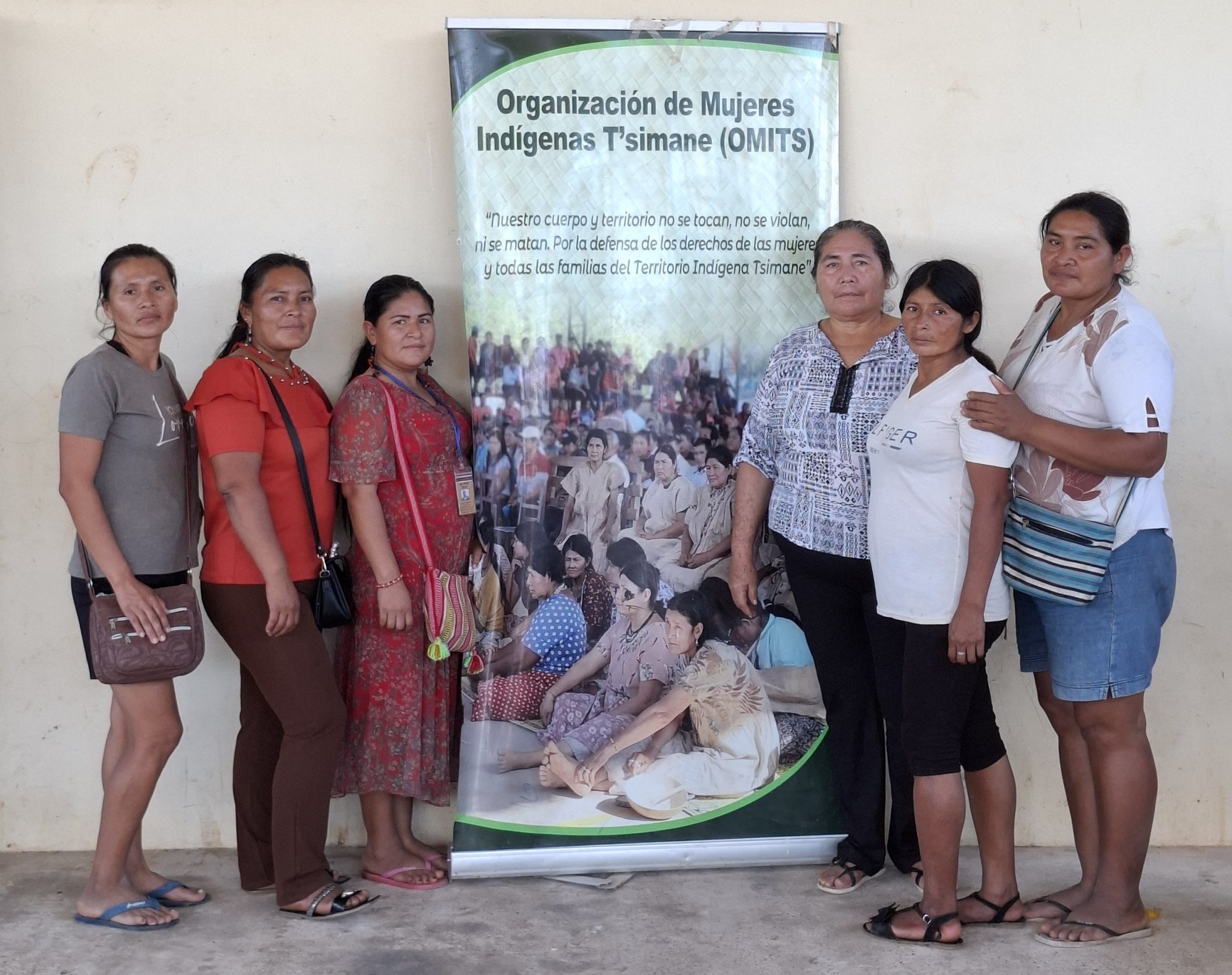
Told by women from OMITS (Organisation of Tsimane’ Indigenous Women). Isabel Cunay Cayuba, Yesenia Vie Durvano and Celia Rosa Sánchez
Making handicrafts is very important to ensure we do not lose our culture. We women engage in a wide variety of crafts, such as: shoulder bags, hammocks, mats, necklaces and tapi brooms; and in the past we also made earthenware (plates, pots and jugs) and clothing from cotton and corocho.
The men make arrows and bows, canoes, callapo, peach palm rings, tools such as the batán for grinding chicha and strainers, ladles made of peach palm and taquara, and the zarso (a hanging chuchío container for storing meat out of reach of animals).
Both women and men make vessels for drinking chicha, weave baskets, mats, fans and hats from motacú and jipi japa, and work with jatata for roofing.
However, this culture is being lost because some of us no longer practise it and some grandmothers no longer teach their descendants. These days, young people go off to work, see that life outside is very different, and feel ashamed of their culture (such as carrying a marico, or dressing as people used to). When we go to the city, we wear trousers, but when we return to our communities, we put on our traditional dress (the yenso, made of cotton, which we buy these days), make chicha, grab our machetes and head out to the chaco.
We want to reclaim our culture, to ensure it is preserved and does not get lost, and that is why we teach our daughters and sons so that they may learn and continue to pass on this ancestral knowledge.
Mo’jäm’tyejas jäm tãcdyetsũñ anic mo’ jemonãc pajki jam motsi’ yicdye’ tsũñ.
Mo’ iñ phen me’je’si’ iñ mo’ sara’ij, e’biña, shipnã, tyikacdte’, siñakity tãpi jũdyeya’ yocsi’ urucyas jäm’tãcdye’ iñ, yeja’ puñuj, piji po’tso’, tã’dyity po’tso’, jä’chhäs, jũdyeya’ mo’ khofjitidye’ tsũñ khuityi’ ki’si’ tsũñ phanãcdye’ jũdyeya’ mu’ ashaba’.
Mu’ iñ soñ’ iñ jäm’tye’iñ, ijme, koidye’ koamba, atsa, sontika shibo’, tã’tã’, kafoñ’yis, yu’tãkis sarso, wecyis yu’tãkis shush, pheñ iñ j ũdyeya’ soñ’ iñ, jäm’tye’iñ shocdye’, kanasto, shomeroro, phañe’iñ kajtãfa’, khiñ’ aty motsi’ mo’ yicdye’ tsũñ, khakhaij nã aty jam me’je iñ, khiñ’ mu’ iñ isho’ muñtyi’ iñ aty jam ji’chhiyacsi nãnãmuñtyi’iñ, khiñ’ mu’ iñ nãnãmuñtyi’iñ shupki iñ karijtãki iñ aty ka’ñibuñya’ iñ tsikatãkhañki khuisi’ yicdye’in, mo’wecdye’ sara’ij jũdyeya’ mo’ khofjitidye’ mu’, sobakiya’ ki karsona ki kite, jemoñe’ me’jebajsha’ mo’ yicdye’ tsũñ jam ra’ tsikatyeya’ khuisi’ yicdye’ tsũñ, pajki jam motsi’ jemoñe’ ji’chhiyakha’ ãwa’ tsũñ pajki mu’ iñ chhiye’khuisi’ yicdye’ iñ, pajki jam motsi.