
We are delighted to share the publication of a new article that lays out part of the conceptual foundations of the IEK-CHANGES project. In a paper published in the Journal of Ethnobiology and Ethnomedicine, Álvaro Fernández-Llamazares and Irene Teixidor-Toneu introduce the idea of forward-looking ethnobiology, an approach that brings Futures Thinking into the study of relationships between people and nature.
Ethnobiology has traditionally focused on documenting the dynamic relationships between communities and their environments, with a strong emphasis on cultural memory, historical continuity, and present-day knowledge systems. This new work argues that the discipline can expand its temporal scope by engaging more explicitly with the future. Rather than replacing the careful documentation that lies at the heart of our research field, a forward-looking ethnobiology complements it by integrating anticipatory perspectives, Indigenous epistemologies, and ethical reflexivity into research design. Drawing inspiration from Futures Studies, the paper explores how participatory and place-based approaches can support Indigenous Peoples in co-envisioning desirable biocultural futures and navigating accelerating social-ecological change.
These ideas are central to the IEK-CHANGES project and form the basis of the PhD research of Clara Martínez-Soares, who is exploring how futures-oriented methods can support community-led reflection on biocultural changes in the Tsimane’ Territory. In practice, this approach is being developed through participatory workshops, photovoice documentation, and sustained dialogue with Indigenous authorities. By linking observed patterns of cultural and ecological change with collective reflection on possible futures, the project aims to contribute to a more reflexive, anticipatory, and socially engaged ethnobiology.
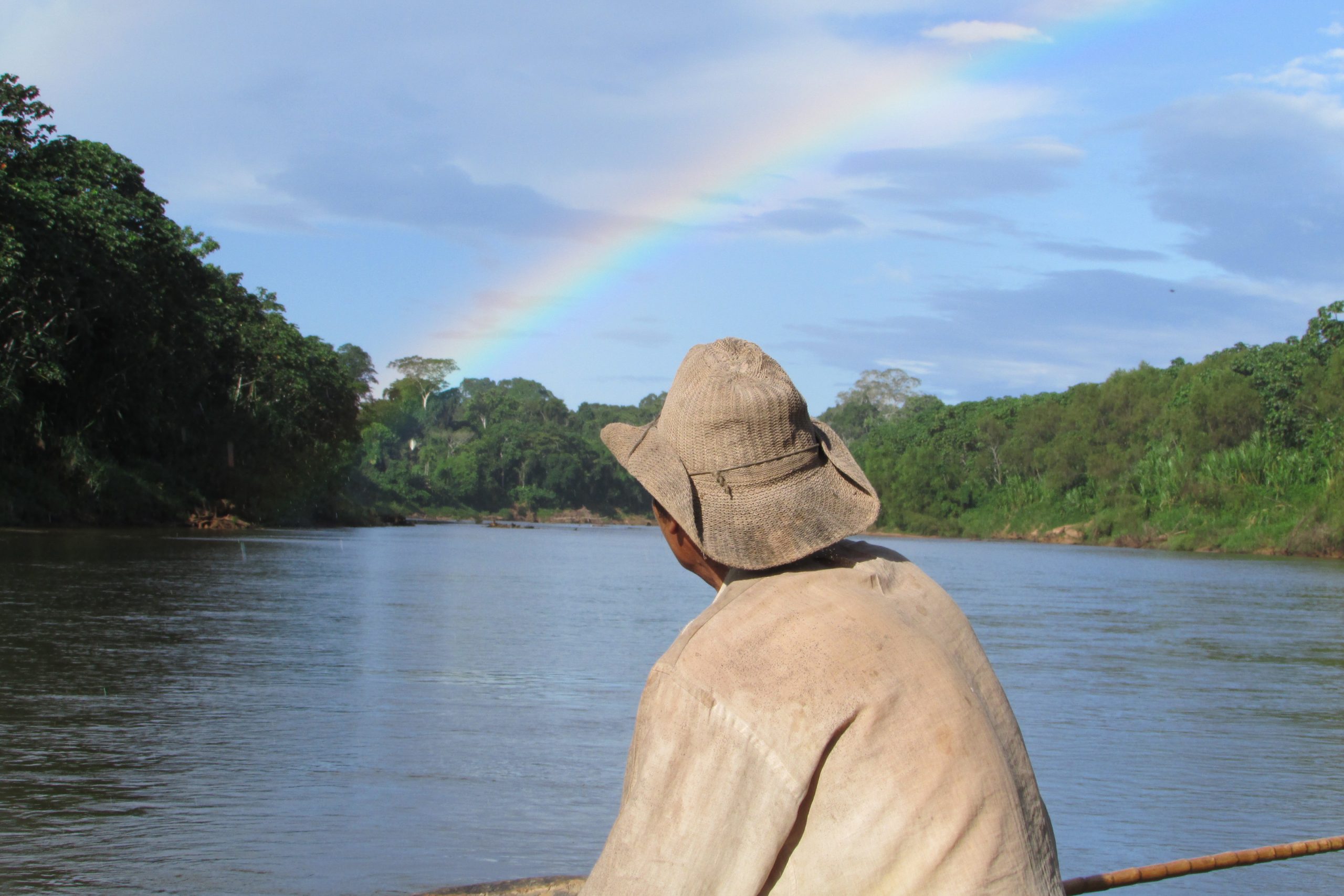
Photograph of rainbow over the Maniqui river, by Isabel Díaz-Reviriego.
You can read the article here:
https://link.springer.com/article/10.1186/s13002-025-00820-1