During our last trip to the upriver communities, we held four workshops to discuss Tsimane’ culture. Using photographs taken by community members, we worked together to identify the key cultural aspects that define what it means to be Tsimane’. These included living close to the forest and the river, hunting, fishing, making and using saraij to carry a variety of items, wearing necklaces, and thatching cajtafa’ roofs. Together we highlighted the environmental and technical knowledge embedded in each of these aspects.
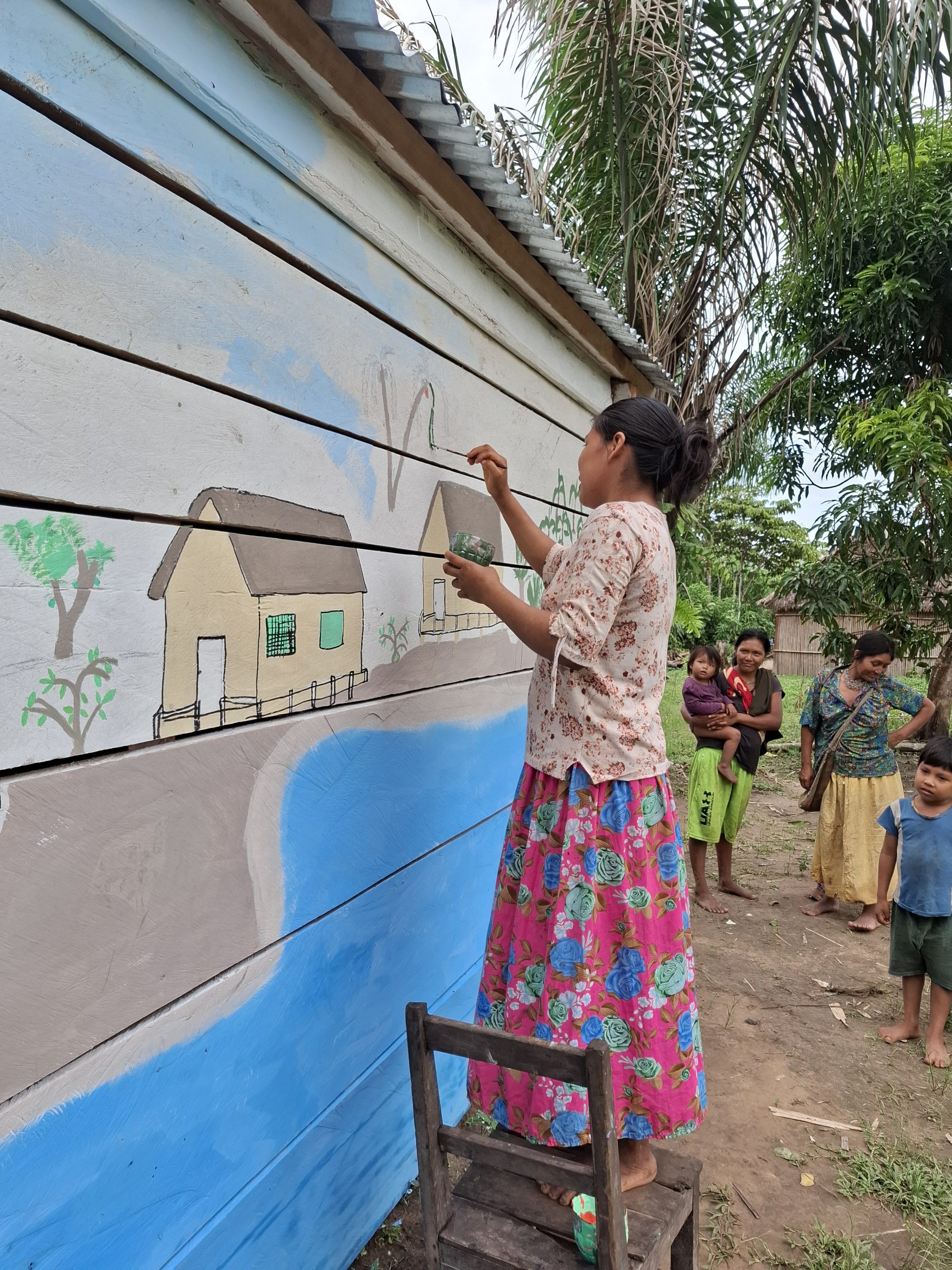
The outcome of the workshops was a beautiful mural on the walls of the health center. We drew three scenes, representing, respectively, the past, present, and future of the community. Throughout its creation, this mural sparked interesting discussions about the key aspects of Tsimane’ culture that should be preserved and what the community of the future should look like. The discussions held during these workshops and around the mural will be a central part of Clara’s research in which she explores different methodologies to co-envision and co-create a sustainable biocultural future.
Although many people contributed to the mural’s design and painting, special thanks go to Salomón Hiza, whose remarkable artistic talent brought most of the mural to life.