
Our research with the Tsimane’ people of the Bolivian Amazon has recently been featured in the Spanish newspaper El País in a beautiful article written by the journalist Noor Mahtani. The piece highlights and discusses the findings of one of our recent scientific studies, which reveals a striking ecological pattern: across many regions of the world, the birds people see today are often much smaller than those they remember seeing decades ago.
The article highlights how this research draws on the biocultural memory of Indigenous Peoples, including the Tsimane’, whose long-term observations of forests and wildlife provide invaluable insights into environmental change. For the Tsimane’, these changes are not just ecological, they are also cultural. Birds that once played important roles in stories, rituals, and everyday life are becoming rarer, reminding us that biodiversity loss is also a loss of cultural heritage and memory.
We are grateful to the Tsimane’ communities who shared their knowledge and experiences for this study. Their observations remind us that Indigenous ecological knowledge is essential for understanding how nature is changing, and for imagining pathways toward a more sustainable future.
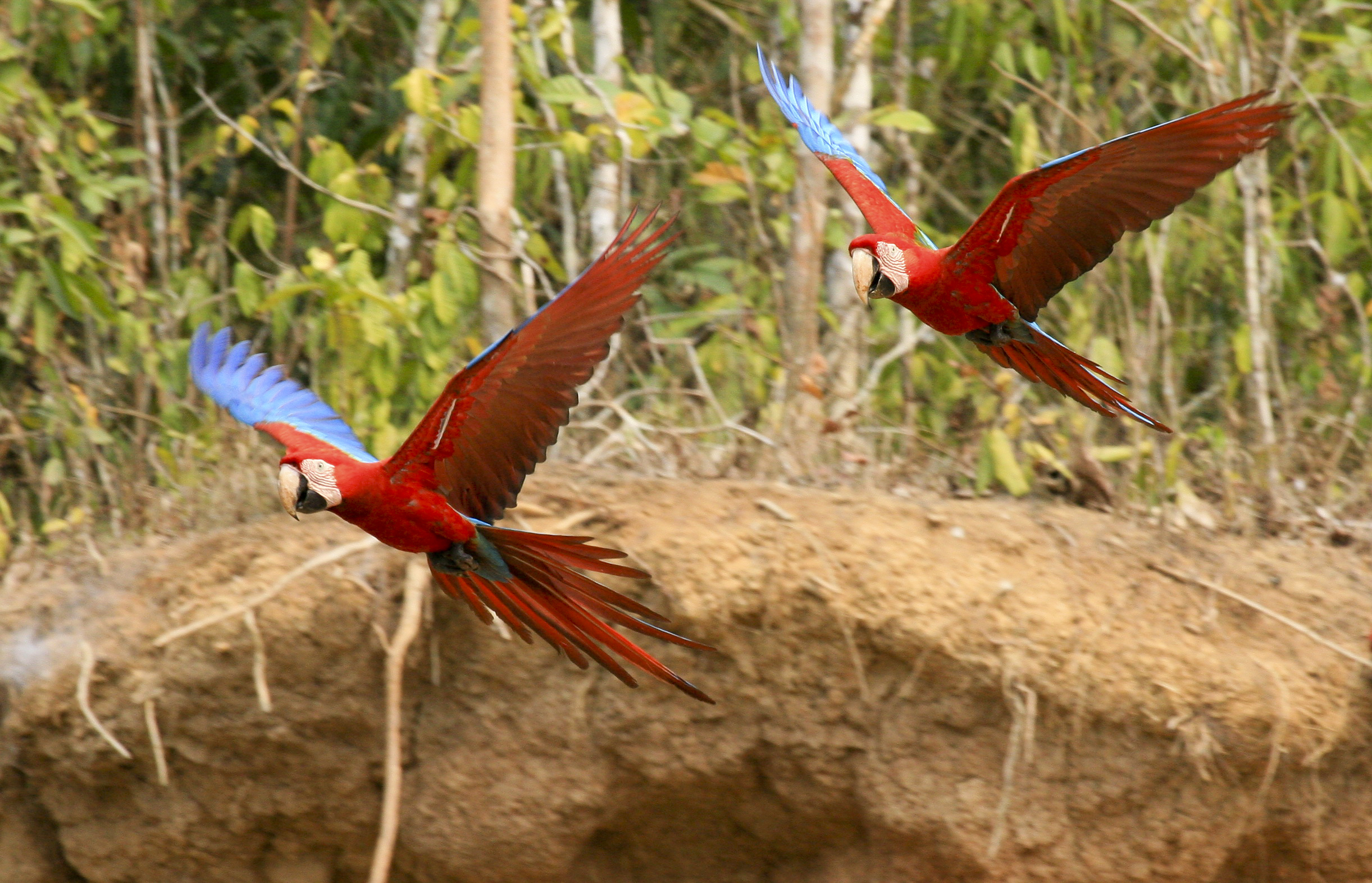
Photograph showing two red-and-green macaws (Ara chloropterus) flying, by Joan de la Malla.
You can read the article here:
https://elpais.com/america-futura/2026-02-25/las-aves-que-vemos-hoy-son-hasta-un-72-mas-pequenas-que-las-de-hace-80-anos.html